Category Archives: Archistories

Marklin 89941 Transfer Table: brief notes on history and repair

First introduced to the mini-club line-up in 1977 the 8994 transfer table would remain unchanged in design until 2002 when it was upgraded with a 5 pole motor and the item number was extended by a ‘1’. From 2003 until 2012 the 89941 transfer table was available with a few packaging changes including white versus blue transformer and controller plus a five pole motor. Manufactured throughout its long history in Italy the transfer table is a very well designed and precision accessory for mini-club, it could be used on a layout for modeling steam and diesel, but it could also be accessorized with catenary for electric locos.

I have seen many early and late transfer tables and all were in excellent working condition owing to the excellent design and manufacturing.

The one and only issue with the transfer table 89941 that is easily overcome has to do with delivery specs, three times 89941 was delivered to a local dealer from Walthers and each was afflicted with the same issue: motor housing top plate separation and subsequently gearing detached along with operators’ cabin. No fear, I was able to easily put each back together again. Probably poor packing and shipping from Walthers to Pennsylvania shook things up a bit, but the problem was easily mitigated, and I wanted to share brief notes on the motor housing for new and old transfer table fixes, repairs and restorations.

The motor housing on the transfer table is easily accessed by slipping off the operators’ cabin and then gently working off the top plate of the motor housing which is held in place by clips. Inside the motor housing three sets of gears and the motor. If you need to remove hardened oil simply remove the vertical gear and top gearing to connects with motor and soak in original (blue) Windex, leave motor and second gear in place and with careful use of toothpick, tweezers and very small cleaning cloth remove dirt and hardened oil from the inside of motor housing. Don’t obsess here, normal loco dirt and debris such hair do not afflict this part, careful not to add lint to the housing by cleaning.

To reassemble the motor housing locate mounting hole for vertical gear in base of motor housing (see shiny brass part with hole in base), worm drive end of gear sits in this hole. Note: worm gears align with regular gears only, they do not function together. Large gear is correctly installed on top engaged with worm gear (bushing on each end of top gear that engages with motor allow it to move freely, double check this gear is properly installed before proceeding). Before attaching top plate locate hole with brass bushing, this hole will align with top of vertical gear. Lastly slide on top plate and test.

Underside of top plate with brass bushing, top of vertical gear sits within the bushing.

Everything fits correctly when the motor housing has no gaps.

Note: bridge only moves with power applied when gearing is properly installed, it will not move freely unless the vertical gear is removed from the motor housing.

Don’t be afraid to buy the transfer table used, I have never seen one that can’t be restored with a simple cleaning or realignment of the bridge and those include some late 1970’s examples.

Good luck and happy railroading. Stay tuned for the next post, an exciting loco shed to go with the transfer table has just been released!

Archistories ARC-104171:

Siding: realistic modeling might include weathering of the bridge and attaching corrugated steel in the form of laser cut cardstock to the roof of the operators’ cabin.

Perfect Partners: Archistories, FR, Z-Modellbau

Three manufacturers from Germany are probably the best small manufacturers in Z gauge today, each complementing one another with prototypical accuracy, precision engineering and design plus high quality material build. Each has their niche filling in where Marklin has not including early Prussian building kits, Scandanavian locos and rolling stock plus small locomotive classes untouched by any other manufacturer of Z.

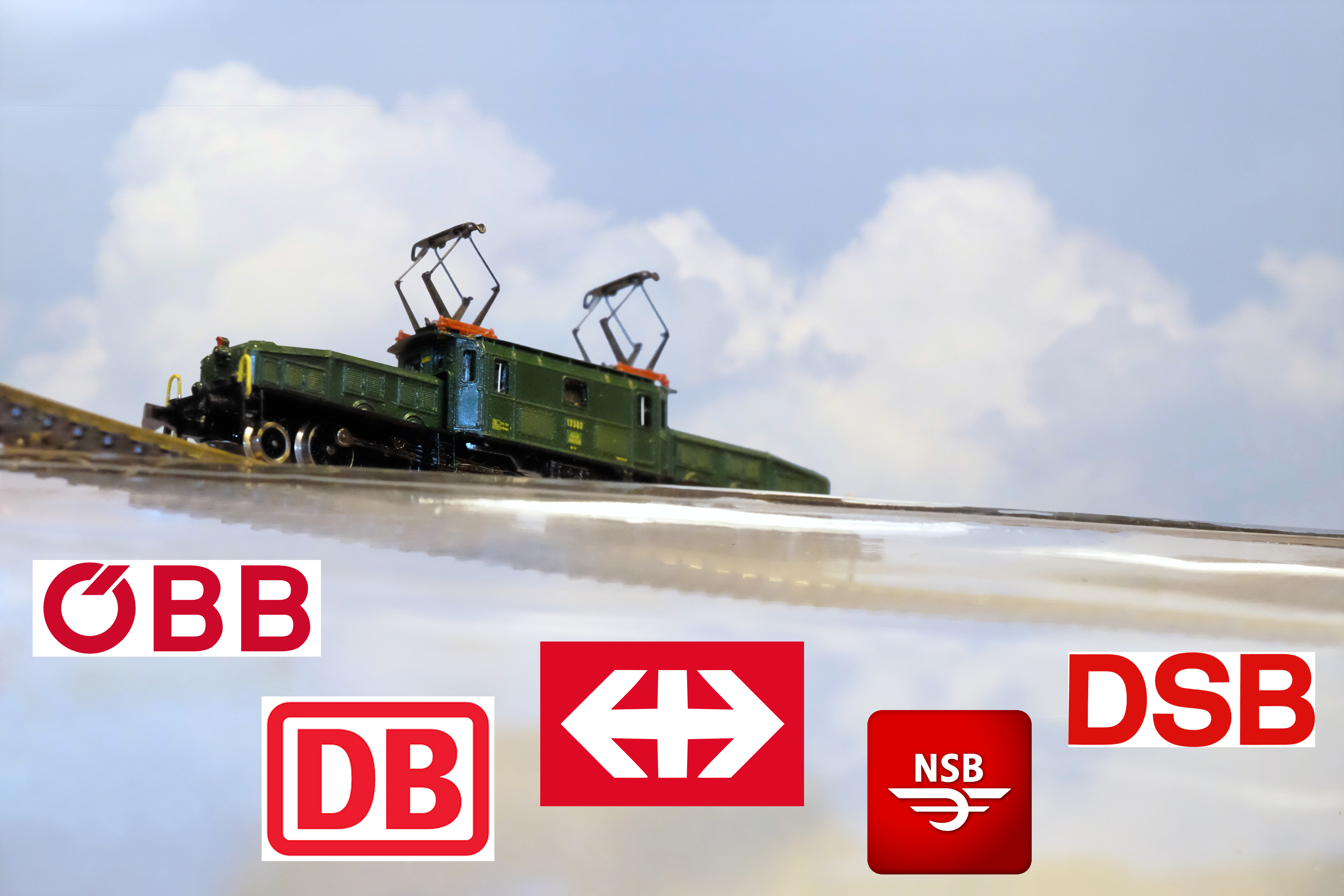
The smallest operating locomotive in Z is represented in the offerings of Z-Modellbau, here is a Kof II painted and lettered for the NSB Railway coupled to FR Freudenreich’s container car for the SJ.

Far smaller in length than a single container car this locomotive features a brushless motor and brass gearing with metal shell.

In another photo a Prussian car-shop is juxtaposed alongside the tiny Kof II locomotive classified Skd211 for the NSB.

Siding: Kof style locomotives are essential for shunting and regional service with simplified operating procedures, a no nonsense locomotive with many useful duties. I plan to operate this one along a pier for shunting harbor freight.

quality-toys-trains on Ebay is the only USA dealer for FR and Z-Modellbau, Andreas is a trusted seller of rare Z!!!

Archistories: Farmstead “Dorpeder”

The other day I announced on this blog the new releases of Archistories, and there are many! Now the world of Z has some excellent buildings for urban and rural by this manufacturer and others, but modern suburban buildings are not covered as yet in laser cut. The Prussian style of architecture is a primary concern for Archistories with many very interesting building types represented with some equipped with motors that turn water wheels and windmills. All Archistories buildings making lighting a joy with predrilled holes in the base and partition walls, but the material nature of laser cut is opaque and won’t glow as does plastic when it is lit.

This farmhouse represents framework construction of the Westphalia region of Germany. Brick is used to fill in between the timbers sometimes the bricks are white washed with the prototype or simply stuccoed, they come in many variations and framework designs in Germany are rather unique seemingly organic constructions with personalities of their own. The wild variety of timber placement in this type of construction sometimes appears planned following some measure of symmetry and other times asymmetrical owing to unique and non duplicated forms. Framework construction with exposed timbers is seen alone and other times combined with sheathing along the roof trusses, brick and stone also make appearances not exclusive to foundation walls. The durable construction technique is also facilitated with strong foundations and steep pitched roofs of slate, terracotta or thatch.

The build of this kit is fun and enjoyable, the finished result is the best thus far in Z for a farmhouse. Some aging maybe desired depending on the era being modeled. The prototype for this example I would guess is mid 19th century to early 20th century when steam ruled and before German reclassification.

ZScaleMonster.com and ZScaleHobo.com are the dealers for Archistories in the United States, both are excellent and reliable sources for this and many more Z scale products.

Looking at Old Photographs for Modeling Ideas Part 5: Farmsteads

Tilled earth, tractors, cows, horses, wagons, people, crops and fruit trees are just a few of the many items a modeler can include with the rural landscape. But missing no more are really good barns and farmhouses in laser cut kits by Faller and Archistories. The recent release of two versions of a farmhouse and barn come from Archistories and include framework construction as does the earlier release by Faller. But Marklin too released a barn (slaughterhouse) with suggested stucco construction. So thus far there are many farm buildings with Archistories receiving the big award for Best in Show!

Archistories “Kallental” (ARC-405171) and “Dorpeder” (ARC-406171)

Faller Bauernhaus (282785)

Marklin 89791 (slaughterhouse including accessories not pictured)

Photo 1: Hartum (village near Hille, Germany)

Photo 2: Hille. Uphoff (note steam tractor)

Photo 3: Horstmeyer. Hille

Photo 4: Hille. Meyers (seed company? note: large barrels, crates and merchants)

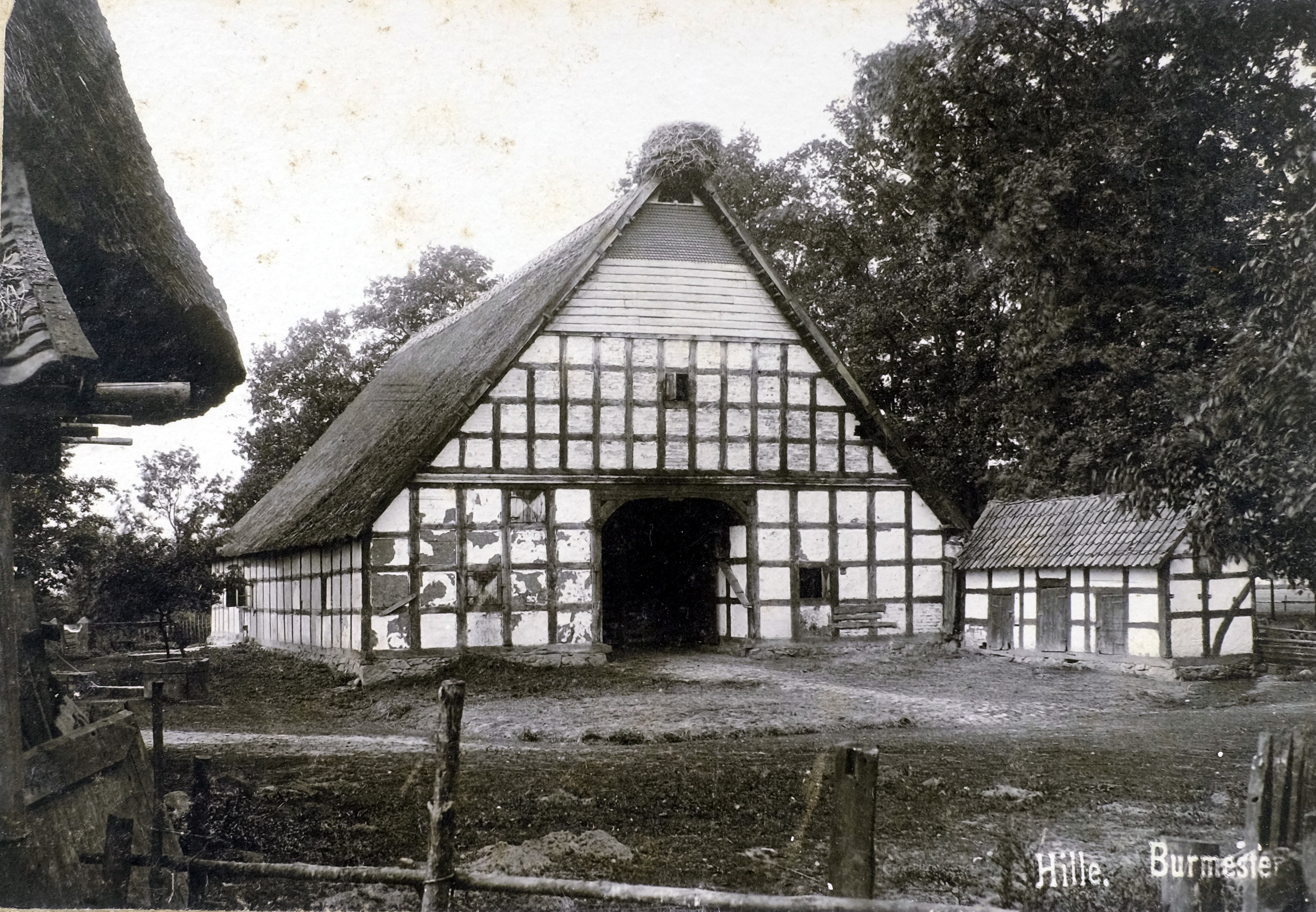
Photo 5: Hille. Burmester (note: white wash chipping off stucco suggesting age)

Photo 6: Hille. Wilhelmy (note: farmhouse with stucco and barn with brick in fill framework construction)

Photo 7: Hille. Horstmeyer (note: muddied path with puddle)

Photo 8: Hille. Bormeyer (note: barn with whitewashed brick in fill and fruit trees planted alongside barn)

Siding: MBZ building kits are available from Reynauld’s in IL, they feature numerous rural buildings and farmsteads but purchasing can be delayed for many months due to small production never the less they maybe of interest to certain themed layouts.

Good luck and have fun!


Looking at Old Photographs for Modeling Ideas Part 4: Rural Houses

Three lovely photographs of homes in the country include scenes with lush vegetation, walking paths, young and old trees. How to model such a dynamic landscape will require keen observing and patience. Plus the right materials and tools.

The Frye House by Archistories

is a good building to start with, add various colors and lengths of Noch Static Grass, trees and hedges but don’t forget to shape the topography. Unless you live in Iowa  rarely is the land flat. Lighting a scene to replicate noon day sun is yet to be discovered when i have a solution I will surely post it. With the right light shadows will be soft and colors will be bright. Tissue paper could solve window treatments in the Frye House which features partition walls as a standard feature thereby allowing selective interior lighting. Walking paths, cemetery and fences are part and parcel of a well lived country side. Today it is possible to model all aspects of these three photographs but first comes planning and careful execution. One such tool that is expensive but worth owning is the Noch Staticmaster, it charges static grass thereby making it stand on end realistically. I got mine from ZScaleHobo.com. A Z scale steam engine taking a journey through such landscapes is the layout experience everyone will enjoy.

Photo1: Cantorhaus. Hille (choir leaders home next to cemetery and Christian marker)

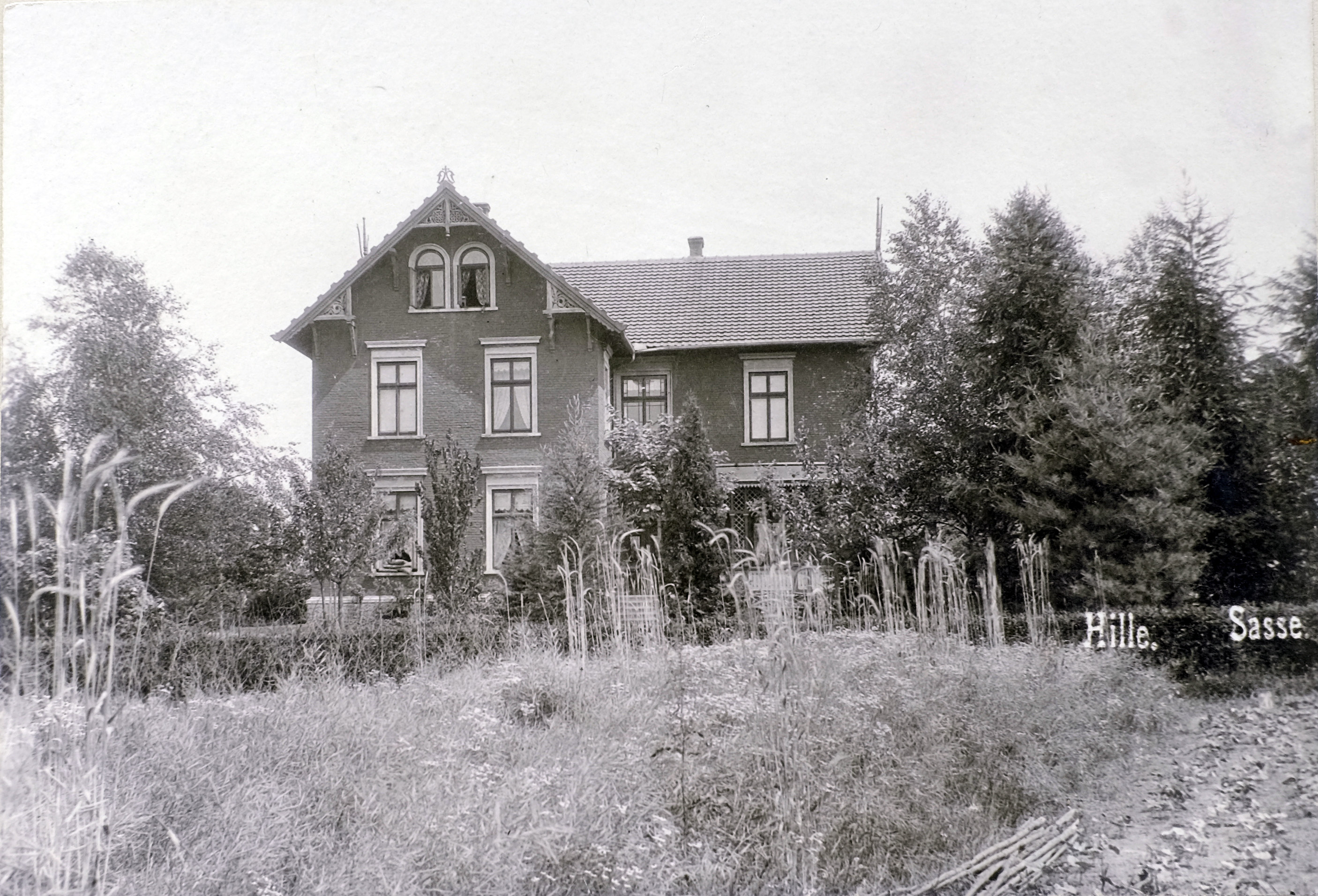
Photo 2: Hille. Sasse

Photo 3: Hille. Bexhof

Looking at Old Photographs for Modeling Ideas Part 2: Roads

One of the great challenges for me is modeling realistic roads in Z scale. Before asphalt and cement roads were dirt, gravel, cobblestone pavers or brick. The likely road surface around 1900 in the country was dirt which varied greatly in color, width and smoothness.

The attached photographs give a glimpse of what a country road in a farming community would have looked like including cattle and horse dropping and the texture of wagon wheels in mud plus the occasional appearance of leaves blown against a wall.

Photo 1: Hille. Strasse

Photo 2: Hille. Strasse

Photo 3: Strasse. Apotheke (pharmacy presumably to the left)

Siding: Noch offers numerous choices for roadway construction including, gravel, cobblestone, and asphalt. Check out ZScaleHobo.com for these and other offerings from Noch.

Looking at Old Photographs for Modeling Ideas Part 1: Public Buildings

Photographs offer a vast array of ideas and insights into the past, and those touchstones may be a resource for modelers in Z. I recently purchased a collection of albumen photographs produced between 1890-1900 of various German subjects including railway scenes, town architecture and rural scenes that include farmsteads. If you model German railroading before reclassification these photographs maybe useful for ideas on scenery construction and scratch built buildings.

I will be featuring 22 photographs from this collection that appear to be made by the same photographer who used a 5×7 view camera with glass plates thereby insuring crisp detail. The precision of these photographs will be helpful in viewing fence types, tree types, road construction, topography, placement of buildings and the like. Each photograph is identified in the lower right corner, I will be researching these locations as much as possible, but consider for a moment that all appear to be taken in roughly the same region of Germany and most cases Hille, Germany which is situated west of Minden in Westphalia. Note: landscaping tends to look more overgrown than contemporary landscapes, in order to model this effect layers of landscaping materials need to layered in size and color.

Photo #1: Porta. Wittekindsburg built in 1896 (restaurant with people congregated along a sandstone fence)

Photo 2: Hille. Schule Witloge (school with excercise bars)

Photo 3: Molkerei (milk processing plant)

Photo 4: Hille. Pfarrhaus (parsonage)

Photo 5: Hille. Hartmann (goods store owned by Wilhelm Hartmann)

Photo 6: Minden. Kriegerdenkmal (1870- 1871 monument Minden)

Siding: Archistories has released numerous wood and metal fences depicted in fine laser cut plus industrial smokestacks to further accessorize Z layouts.


Good News! New Releases from Archistories 2017

Archistories “Dorpeder Hof” (photo: courtesy Archistories)

As many of you know who read this blog I am big fan of Archistories building kits for Z gauge. Archistories can be credited perhaps with igniting the trend of fine laser cut buildings in Z, they are fun to build and real architectural models: one step closer to reality! And they look great!

Archistories “Kallentaler Hof” (photo: courtesy Archistories)

The good news is Archistories has been been releasing numerous items recently with more to come including scratch build accessories and fencing solutions!

Today I received kits of two versions for farmhouse and barn: “Dorpeder Hof” and “Kallentaler Hof”. Both feature framework construction, but one is stucco and the other features brick fill with timber framework. The brick detail in the “Dorpeder Hof” kit is superb, it is also the kit I chose to build first. Each kit includes two buildings: farmhouse and barn with terracotta tile roofs. Overall an easy build which should take the experienced modeler 3-4 hours to complete. The only real difficulty with the buildings is lining up the filigree framework which is glued over the brick panels. Note: it is impossible to realign paper after pressure is applied.

I usually include a few notes based on my experience building laser cut that I hope are helpful. The instructions are always without error with Archistories, but I would point out a rather unique construction outlined in the instructions: farmhouse ends are built layer upon layer in more than 10 steps which require patience and precision, maybe 1/2 hour should be allowed for each. It is easy to overlook a step or part with complex constructions, probably rehearsing the assembly of all parts without glue is helpful. The other remark I would make is with the barn, part A10 is a delicate part that I recommend gluing to the base, but gluing it to the top panel only after it is assembled without glue. And great care should be exercised to avoid bending or breaking part A10.

Note: unlike plastic kits, some laser cut parts need to be aligned by the modeler such as decorative embellishments and moldings thus the parts that suggest joists should be aligned precisely with the framework timbers as is the case with the sides of the farmhouse.

Two dealers in the United States are reliable sources for Archistories:

  1. zscalemonster.com
  2. zscalehobo.com

Siding: the right glue for laser cut is Noch 61104 available at zscalehobo.com.

Siding: for realistic treatment of layout scenery stay tuned for historic photos recently discovered that might be helpful. Find under category “Scenery: Historical Guide.”

New Releases: Archistories “Signal Towers” + Marklin tank loco 88957

The perfect companion for Archistories buildings along the rails is Marklin and vice versa. Three new releases by these two companies plus one more Archistories will be the gist of this post.

Both companies of German origin go hand in hand, Archistories reaching back in time with their early Prussian design brick industrial buildings which service the railway and Marklin’s wide range of Era 2-6 locos and rolling stock. A new release by one of these companies builds on the tradition of what has been released thus far.

For Archistories two new signal towers one of brick and the other framework construction complement another interlocking tower with exposed timber released a few years back.

Variations in their kits include thus far have included framework versus brick as was the case with the mill building which can be seen here along side the new release signal tower of exposed timber/framework construction. Framework construction can be seen in Germany in a variety of uses including residential. Adding several different building types in exposed timber versus brick makes for a very interesting landscape.

Notice the mill propped by tweezers to level it out for the photo, the wheel extends below grade and it is serviced by a small motor provided in the kit. Simply soldering is required to attach two diodes in-line to the positive pole, wires thus descend below the structure and will thus be hidden from view after the building is planted in your layout’s landscape. The first step to making the mill is the wheel which is the more involved than the rest of the kit, but it is fun to start here knowing that by the end of the day that wheel will be turning wheat berry into flour for your town’s sustenance. The motor provided in the kit is shaped to perfectly conform to the buildings framework, but before proceeding you will want to confirm the motor is functioning properly just to be sure, it is highly unlikely to have a motor defect in an Archistories kit. The manufacturer suggested to me that a couple of more diodes can be installed to reduce the sound of the motor, I am a okay with the movement and sound, I don’t feel additional modification is warranted. Special Note: diodes should never be covered by electrical tape due to the potential of overheating, leave them naked so to speak!

Finding a home on the layout will require a mill race with partially dammed water to create pressure, one door is provided to the bridge that could provide access to a parking area for a truck or wagon. A Preiser figure or two will sure add scale and built into each Archistories kit are partition walls to carefully control light flow inside the mill.

If you have ever wondered what a signal tower looked like way back in the day Archistories has provided us with three examples including the two mentioned in this post. When signal towers had a purpose they housed throw levers made of brass that skilled operators would throw and pull to control semaphores and track switches. In the United States switch towers can be seen variously within large switch yards but the throw switches have been replaced with electronic push buttons. And for that matter modern control can be carried out miles away. Signal towers in the United States were so well built as was other rail infrastructure that many abandoned years ago still stand today.

Archistories has modeled their signal towers/interlocking towers with many throw levers, and they have provided large windows for good visibility, the name of the game is coordination and visibility, railways could not sustain frequent accidents or misaligned trains thus the operator of signals and switches provided a very important contribution to safe and efficient rail service.

Marklin’s new tank loco is a member of the elite new and improved steam loco design for Mini-club that includes partially new tooling including the active side rods whose movement is a lively and graceful dance, new tooling includes detailed running gear and brakes. To not mention the extensive and crisp painting and printing would be an oversight since the level of detail probably extends further than we can see, but it is reassuring that Marklin still goes further than we might require to bring the model closer to the prototype. This one being the KPEV class T12 tank locomotive with “Berlin” destination board and used in suburban traffic. Marklin 88957 is an MHI Exclusive, collectors will need to contact an MHI dealer to order this one. The Marklin Handlers Initiative constitutes those dealers who order everything Marklin produces thus guaranteeing availability of certain releases other dealers may not have access to. Having a relationship with an MHI dealer who also handles your Insider subscription will guarantee your collection grows with some of the rarer releases.

Recommended: Noch 61104 laser-cut adhesive features pin point accuracy when applying glue in small drops for laser-cut cardstock building construction: faster than applying glue with a pin or toothpick!

Good luck and happy railroading!

Archistories: Interlocking Towers Kallental and Dorpede

Sitting along side this 1915 “Achilles”  Marklin 1 Gauge live steam engine are two new releases by Archistories: Kallental and Dorpede “Interlocking Towers.”

Both buildings follow the same architectural design but vary in material construction, one is brick and the other is open timber. A throwback to a time in railroad history when signals and switch turnouts were controlled mechanically by an operator. Today these structures have largely disappeared with the advent of electric controls: push buttons replacing throw levers.

Which one you choose is a matter of personal preference, but each reflects distinct styles of German industrial architecture. Cut-outs are incorporated into the buildings for accessory lighting along with partition walls to control light flow. Additional features that are new to Archistories kits that I have assembled are scored boards for continuously folded frameworks walls, open timber and even ornamental brickwork. Working with long parts that fold is assisted by very light scoring along those lines that have already been etched by the laser. Archistories kits are nothing like all the other ones on the market by other manufacturers, Archistories can be described as kits combining the highest quality materials, precision and design. Here you will find beautiful roof sheathing that is attached to solid underlayment, parts that actually fit together perfectly, and highly detailed window frames. Crisp detailing throughout inspire one to sit and marvel at the finished projects.

If you are new to building laser cut with numerous small parts and parts with filigree I would suggest a couple of practice runs applying glue to thin strands of scrap material before jumping in and gluing the open timber framework on the Kallental Signal Tower. The simple rule to follow is to place drops of glue instead of streams of glue in modest amounts and in discreet places. Not much glue is needed after all, parts in these kits are warp free allowing much less glue than other manufacturer’s buildings. Warp free high grade materials characterize Architories kits.

For those on the fence about laser cut I have a simple experiment: 1. Buy one of these kits and assemble it 2. take the finished building along with an assembled plastic building to a real life industrial complex preferably from the turn of the century and abundant in the United States 3. hold both kits alongside real life industrial brick architecture 4. ask yourself which looks closer to real life? I am confident the answer will be Archistories buildings every time.

Building a scene which incorporates these buildings are perfectly illustrated by Archistories company photographs. These dioramas incorporate cast rock formations, static grass of varying lengths and color, shrubs and trees placed as one would see along a railroad siding, track ballasting representing the region modeled and of course the painted or photographically illustrated background. Viewing the scene at eye level brings it all together and the backdrop brings it all together.

Photo used by permission (copyright: Archistories)

Siding: weathering can be added to Archistories buildings, I recommend the dry brush technique. Care should be taken to ensure good results, please keep in mind the high absorbent nature of these materials, it is better to start with a very dry brush and build up layers, too much paint and the building will be ruined. Or don’t weather at all!