Category Archives: Marklin Z

New Releases: Archistories “Signal Towers” + Marklin tank loco 88957

The perfect companion for Archistories buildings along the rails is Marklin and vice versa. Three new releases by these two companies plus one more Archistories will be the gist of this post.

Both companies of German origin go hand in hand, Archistories reaching back in time with their early Prussian design brick industrial buildings which service the railway and Marklin’s wide range of Era 2-6 locos and rolling stock. A new release by one of these companies builds on the tradition of what has been released thus far.

For Archistories two new signal towers one of brick and the other framework construction complement another interlocking tower with exposed timber released a few years back.

Variations in their kits include thus far have included framework versus brick as was the case with the mill building which can be seen here along side the new release signal tower of exposed timber/framework construction. Framework construction can be seen in Germany in a variety of uses including residential. Adding several different building types in exposed timber versus brick makes for a very interesting landscape.

Notice the mill propped by tweezers to level it out for the photo, the wheel extends below grade and it is serviced by a small motor provided in the kit. Simply soldering is required to attach two diodes in-line to the positive pole, wires thus descend below the structure and will thus be hidden from view after the building is planted in your layout’s landscape. The first step to making the mill is the wheel which is the more involved than the rest of the kit, but it is fun to start here knowing that by the end of the day that wheel will be turning wheat berry into flour for your town’s sustenance. The motor provided in the kit is shaped to perfectly conform to the buildings framework, but before proceeding you will want to confirm the motor is functioning properly just to be sure, it is highly unlikely to have a motor defect in an Archistories kit. The manufacturer suggested to me that a couple of more diodes can be installed to reduce the sound of the motor, I am a okay with the movement and sound, I don’t feel additional modification is warranted. Special Note: diodes should never be covered by electrical tape due to the potential of overheating, leave them naked so to speak!

Finding a home on the layout will require a mill race with partially dammed water to create pressure, one door is provided to the bridge that could provide access to a parking area for a truck or wagon. A Preiser figure or two will sure add scale and built into each Archistories kit are partition walls to carefully control light flow inside the mill.

If you have ever wondered what a signal tower looked like way back in the day Archistories has provided us with three examples including the two mentioned in this post. When signal towers had a purpose they housed throw levers made of brass that skilled operators would throw and pull to control semaphores and track switches. In the United States switch towers can be seen variously within large switch yards but the throw switches have been replaced with electronic push buttons. And for that matter modern control can be carried out miles away. Signal towers in the United States were so well built as was other rail infrastructure that many abandoned years ago still stand today.

Archistories has modeled their signal towers/interlocking towers with many throw levers, and they have provided large windows for good visibility, the name of the game is coordination and visibility, railways could not sustain frequent accidents or misaligned trains thus the operator of signals and switches provided a very important contribution to safe and efficient rail service.

Marklin’s new tank loco is a member of the elite new and improved steam loco design for Mini-club that includes partially new tooling including the active side rods whose movement is a lively and graceful dance, new tooling includes detailed running gear and brakes. To not mention the extensive and crisp painting and printing would be an oversight since the level of detail probably extends further than we can see, but it is reassuring that Marklin still goes further than we might require to bring the model closer to the prototype. This one being the KPEV class T12 tank locomotive with “Berlin” destination board and used in suburban traffic. Marklin 88957 is an MHI Exclusive, collectors will need to contact an MHI dealer to order this one. The Marklin Handlers Initiative constitutes those dealers who order everything Marklin produces thus guaranteeing availability of certain releases other dealers may not have access to. Having a relationship with an MHI dealer who also handles your Insider subscription will guarantee your collection grows with some of the rarer releases.

Recommended: Noch 61104 laser-cut adhesive features pin point accuracy when applying glue in small drops for laser-cut cardstock building construction: faster than applying glue with a pin or toothpick!

Good luck and happy railroading!

Your wish has been granted: 2 new releases from Archistories!!!!

It has been too long since I have put together an Archistories building kit, and just the other day I was hoping for a new release; my wish was granted two-fold with the release of a signal tower in two versions: 1. 101161- Dorpeder/Moosbach brick construction variant one and 2. 102161- Kallental/Biberbach open timber variant two.

Archistories 101161

Archistories 102161

*Photos courtesy of Archistories.

If you have not assembled an Archistories kit let me tell you to get on board and put one of these kits together. Realism with fine detailing and historical accuracy are built into each kit. Plus the best build instructions of any building kit out there for ‘Z’. The novice who takes their time and enjoys the journey will produce a building so fine family and friends will take note that this hobby of your’s is serious business.

Archistories granted permission to use two of their company photographs in this post. The photographs illustrate how nicely these buildings can look in a railroad diorama whose design and construction is equivalent fun to running trains. And very satisfactory investment of time!

Laser cut fiber buildings are the next generation, this and other developments in ‘Z’ are getting scale model railroading closer and closer to the prototype.

I ordered both kits the other day from Z Scale Hobo, they should arrive any minute although my postman is on holiday so hopefully these minutes will not pass into hours. Can you tell I am anxious to start building these signal towers????

In the meantime as I continue to wait let me mention a few words about ZScaleHobo.com. Simply posting a link to this store would not be enough, in this day and age there are internet stores popping up all the time, but ZScaleHobo.com is not your typical online retailer of trains.

Here are some of the unique (not overstated) reasons to shop here: 1. enthusiastic specialist dealer/owner Frank      2. accurate inventory posted on the website      3. prompt shipping      4. variety of hard to find parts in stock     5. well rounded products by respected manufacturers including this one     6. best prices

You won’t find a better dealer of Z scale!

Here is a link to peruse the Archistories offerings at ZScaleHobo.com:

http://zscalehobo.com/archistories/archistories.html#Z-Scale

Time to go, I hear the postman. Question: which building should I start with?

Good luck and have fun!


SBB CFF FFS class Ce 6/8 III: Marklin’s new release 88563!

The iconic articulated Swiss loco “Krokodil” has long been associated with Marklin in all their scale models, but the new 88563 is a further development of this Era II loco in technological terms for ‘Z’ collectors following numerous releases of this loco in special editions and other variants since the first 8856 (green paint scheme) serie Be 6/8 in 1979 and the 8852 (brown paint scheme) serie Ce 6/8 in 1983.

For the first time changeover headlamps/trailing lamp in LED. Plus partially new tooling including the incorporation of catenary switch below the hood as it were and the removal of the roof top screw formally used to switch power on the circuit board from track to catenary. Removing the catenary screw from electric locos has been a continuing design function of the new locos just as improved running gear and side rods on the steam engines, it is a good time to get into the Marklin mini-club hobby!

Photo: 88563 (top chassis and bottom hood) and 8856.4 (green loco chassis and its hood showing hole through roof to support catenary screw)

A brief look under the hood between the new release and an older 8856 variant is a new circuit board supporting wires for the LED changeover lights thereby obscuring the motor, as can be seen in the photo the circuit board is solid and does not support engagement with brushes, this new motor is identified on the parts sheet as E279 138. Is this a new generation motor? A quick google search revealed nothing!?! When I have more time I will be taking this one apart and reporting what I find! Note: runs great out of the box!

Photo: Marklin 88563 (top) and 8856.4 (version 4: 2009-2010)

Note: switching to catenary power is achieved by carefully pushing the slider switch on the circuit board, in earlier versions this switch was a slotted head that extended through the roof of electric locos.

Follow-up: The new 88563 reveals a new generation motor! I couldn’t wait to find the time to conveniently take apart 88563 to reveal its workings so first thing this morning I opened it up. On first inspection of the circuit board I missed noticing the black and tan leads soldered to the circuit board which descend through holes in the board to the motor, which sits in a newly designed chassis. As with all 8856 variants the articulated locomotive design is comprised of three parts including mid section containing motor with two worm drives and front and rear driving wheel sets, in this new locomotive the mid section chassis is newly designed and dispenses with circuit board clips as well as any visual access to the motor. The circuit board is further redesigned in function but also appearance with two retaining screws and a much thinner board.

Future repair: Any future repairs to this locomotive will be difficult for any but the more advanced modeler. Due to its thin construction the circuit board will be prone to cracking and replacing the motor will be a skilled operation requiring un-soldering of points on the circuit board. How often are future repairs expected on Marklin Z in general? ZERO in my experience except for the cleaning of gears and motor upgrades of the traditional 3 pole/ 5 pole variety.

Closing: Thru advancements in technology and detailing closer to the prototype Marklin is producing some truly outstanding trains, but more intricate parts and complex wiring schemes could be seen as challenges to overcome on the workbench.

Siding: If you have an SBB Krokodil that runs rough perhaps after cleaning and reassembling it maybe due to the front and back side rods being out of alignment. If the loco runs well in one direction but rough in the other reassemble side rods so they are high on one end and low on the other.


Blast from the Past: Marklin 88035 “Bumble Bee”

If you are an American railroader the “Bumble Bee” loco may already be in your collection, it has been released in many versions and many scales by numerous manufacturers. In 2004 Marklin released their “Bumble Bee” loco and tender for the mini-club line-up, it was cast in brass with metal tender. This “One Time Series” featured fine detailing and add-on parts with non working headlamp.

Founded in 1870 the Denver and Rio Grande Western Railroad (D&RGW) was originally a narrow gauge railway who’s motto was “Through the mountains, not around them.” The history of this railroad spans more than a hundred years from its founding as a coal and mineral narrow gauge mountain railway, in 1988 it merged with the Southern Pacific.

The Louisiana & Nashville Railroad built the first 2-6-0 locomotive of this type in 1864, it was a record setter due to it being the largest locomotive in America at that time. The Marklin 88035 could be said to be modeled on a later version with independent front bogie. Service span for this locomotive type was 1860-1910. Operating number for the Marklin “Bumble Bee” is 136. Baldwin Locomotive Works built the narrow gauge 2-6-0 locomotive for D&RGW 1881-1902.

Note to collectors: Marklin’s 88035 is sought after by Z gaugers but also N scalers due to its slightly larger size. 88035 is the first and only mini-club locomotive modeled slightly bigger than scale. Produced as a One Time Series in 2004 it quickly sold out, today it is high on the list of sought after secondary market locomotives. Pricing for this loco range from $500-$1000 (new/mint), but before you buy consider condition as a big part of the price, average used ones in working condition and 80% cosmetic condition should be in the $250-$350 range. Very careful buying trains online without seeing them in person unless you are dealing with a reliable seller or store. Reynauld’s in IL,  ZTrackResale and Z Scale Hobo are recommended sources for secondary market.

Note: to go with this fine loco is the 4 car coach set lettered for D&RGW: Marklin 87910.

Good Luck and Have Fun!

Siding: The Railroad Museum of Pennsylvania in Strasburg, PA owns a Baldwin 2-6-0 locomotive for their collection. One of the finest collections of American railroad equipment can be found in this museum: http://www.rrmuseumpa.org/

Marklin Z: One of the Last Great Collectibles!

Photo: Insider Model 2012: 88010 – BR 001 for DB (no longer available)

Are we collecting or are we acquiring: that is the question. When Marklin Z comes into a collection a bit of railroad history is preserved and a commitment is made by this generation to future generations that hold that Marklin’s history and the greater history of railroading is worth preserving.

Photo: Special Imprint (SMI) 88820: “Swiss Cheese” class Am 4/4 pictured with type Hbis freight car also featuring “Swiss Cheese” paint scheme. (no longer available)

Marklin Z gauge is one of the last great collectibles, it will persevere well into the future, and what has been released thus far since 1972 are limited and rare. Rarity is well liked by collectors of all types, but collecting Marklin mini-club (Z) is truly unique from all other collectibles due to their leadership and innovation in z gauge. There are other companies some small and some large producing z gauge products but Marklin is linked to z gauge by the very fact they invented it in 1972, they continue that history today with innovations including true catenary operation through roof equipped pantographs on their electric locos, realistic working side rods on the steam engines, and numerous diesel loco types including the Russian Ludmillas.

Photo: Export Model for France 2003: 88063 – Reihe 232 TC (no longer available)

Many collected “toys” (only time this word will be used on this blog because railroading is serious business! I’m kidding its loads of fun too!!!) these days are secondary market items from long defunct and beloved companies such as Buddy L from the 20’s. It is exciting to dig around a find some rare item that has not been made for 80-100 years or more, but with Marklin anyone can jump in and start collecting from a company in business since 1859. Buy a mini-club loco today and within a year or two or even a few months it will be out of production and already a collectible. Keeping the condition of your new train pristine is part and parcel to collecting anything, but with Marklin this extends to keeping the box in good condition. Want to run a train on a layout simply select the railroad you want to model and keep the other fine locos and rolling stock on display, displaying is just as much fun as driving those trains.

Photo: Marklin Magazin Edition 88953: BR 74 with lettering and Prussian Blue paint scheme for Marklin Magazin (still in production). Note: 1st locomotive release for the “Marklin Magazin” editions.

For collectors Marklin Z new releases are limited and rare falling into several categories: MHI Releases, Special Imprinted Editions, Export Models, Insider Models, Museum Editions, Marklin Magazine Editions, and general releases. Marklin Handlers Initiative includes releases only available to dealers that subscribe to the MHI program, this subscription includes ordering everything Marklin releases, MHI’s are One Time Series. Export Models are limited to distribution in the given country the release represents thus Swiss Export Models are distributed to Swiss dealers in a One Time Series. Insider Models are available only to Insider Members who maintain year long membership in the insider Club for about $100/ year with many benefits. Museum Editions are car sets inspired by companies with ties to Goppingen, Germany the home of Marklin’s headquarters. Usually housed in a specially printed tin box museum editions include a freight car and sometimes a cast metal truck or van. Marklin Magazin Editions are distributed in the United States by Walthers, these One Time Series freight cars usually depict a new car type, they are always painted Prussian Blue with Marklin Magazin insignia, and sometimes the car designs are inspired by the magazine’s printing production including one car that included a load of reams of printing paper. General Releases are those cars and locos that are announced by Marklin and commonly distributed throughout the world, but aside from the perception of wide distribution these items are still very limited and rare with popular releases selling out fast. Of the categories so described Special Imprints and Export Models are the most difficult to collect with secondary market dealers being the only source for these with the exception of direct purchase from German dealers including those with listings on Ebay.

Photo: Marklin MHI release (2016) 88216: BR 212 (diesel) for DB AG (out of production: still available)

Photo: Marklin regular release (2013) 88998: BR 38 Era III (former Prussian P8) passenger loco with tub style tender (no longer available). Note: BR 38’s have been in the Marklin mini-club program for years including trainsets, but the 88998 was the first generation of this loco type with highly detailed side rods and running equipment. This is one of favorite mini-club locos, it is a real pleasure to watch pulling Prussian coaches its action on the rails is melodic.

Part of the fun of collecting Marklin Z is rarity, this singular aspect of this hobby is underscored by small productions of one time series in multiple categories: Marklin Z the readymade collectible!
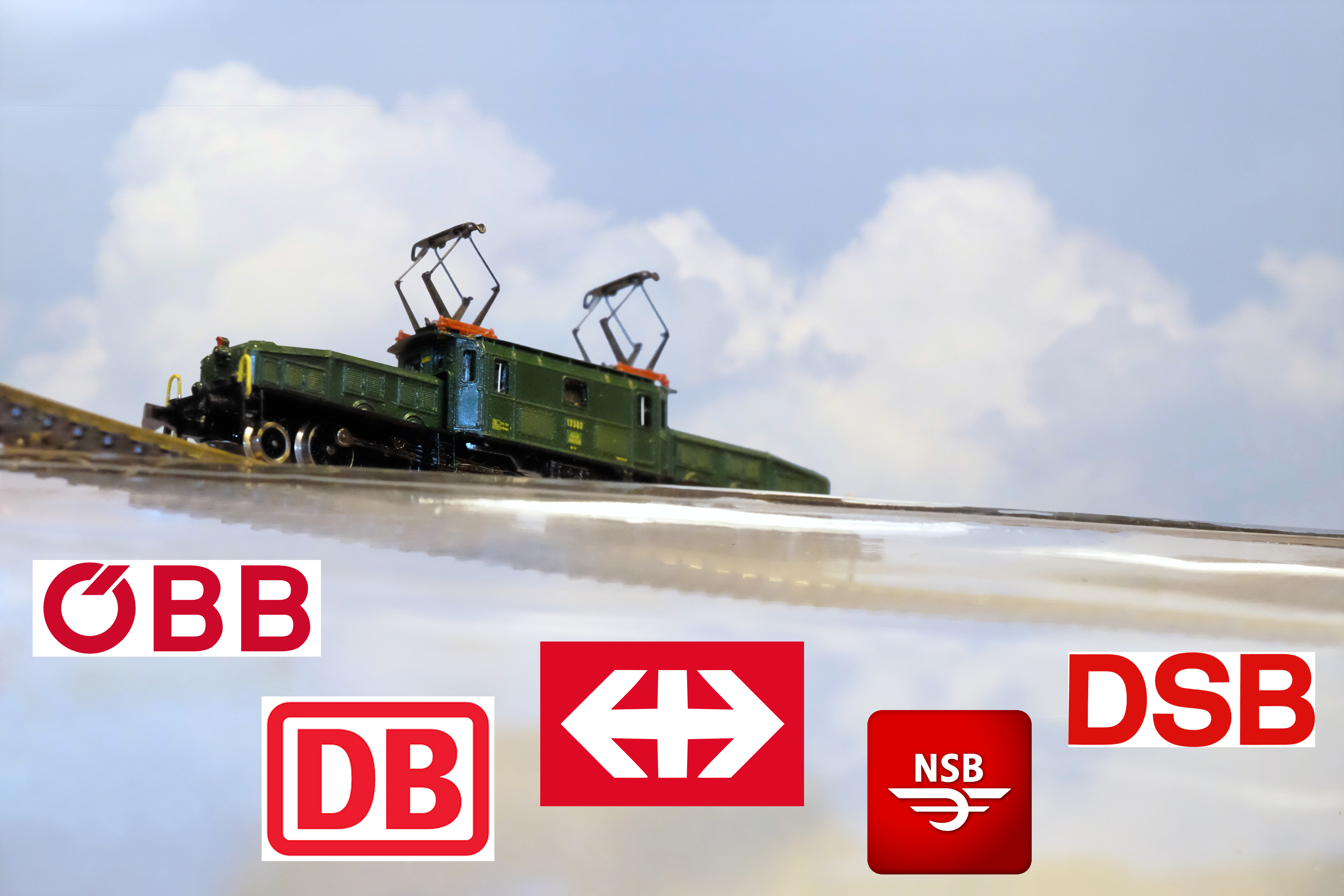
 

Trains are Trains – Marklin Models of Trains are something different and greatly so!

Marklin 88855: BR 03 Express Locomotive of the DB

A subtle thought occurred to me the other day, I was thinking about my last post on Scandinavian snowplow locos of the SJ in Sweden while having a brief moment of reflection during work as a photographer of architecture and interior design. My Wife and I work together so moments of repose sometimes happen during brief interludes moving equipment from the shot just taken to the next.

Marklin 88063: Serie 232 TC of the SNCF

I am very impressed with the offerings of Marklin and their z gauge line in the last five years, the following is a brief post and interlude in the normal technical and historical postings thus far presented at ZTrainsWeekly. This post is dedicated to the type of collector I have met on many occasions hanging out in train stores across the country, train meets and clubs, those that have taken on collecting expensive tiny trains because holding them in their hands and marveling at their striking detail and charm make them happy.

Marklin 88833: Serie 150 Y of the SNCF

So what does a Z gauge railroad loco or rolling stock have in common with the prototype railroad equipment of a particular railroad. First they are in a scale of 1:220 so every 1 inch translates to 220 inches in prototypical scale thus accurately reduced by Marklin in length, height and width dimensions. Graphics and lettering are correctly rendered by Marklin fitting accurately in historic timeframe. Detailing of trucks and equipment appear to show few differences with the prototype. Working headlamps and running lights are sometimes designed into the model and for some vary little with the prototype. But if we start with the prototype and compare it to the Z railroad model of Marklin few similarities can exist including actual equipment operation those being sanders, air brakes, working engines and the like. I hope I haven’t lost the interest of my readers, I am close to making this posting worth while if you have been queried by those that have yet to be bitten by the railroading hobby.

Marklin 88134: BR 132 of the DR

The model can only be a version of the prototype, but an impression of the prototype is far better than real diesel model locos running on diesel fuel throughout your house killing your houseplants and annoying your wife or steam and arcing electric ones. The comparison between the prototype and the model resides in the idea that the prototype surfaces on the rails in front of us and embodies history, design and awe whereas the model railroad elicits its connection to the prototype but also triggers our imagination thus connecting us to the models in serious and creative ways. All model railroad collectors are connected in this way, we can study the history of the prototype and marvel at its representation as a model as something else thus collecting the miniature is our railroading connection not limited but expansive.

Marklin 88106: BR 05 of the DRG and Marklin 88075: Class J-2 of NYC

Models of trains and their prototypes were built side by side since railroads began in the 19th century, Marklin was the first to successfully manufacturer commercially available miniature trains. Cheers to Marklin and another 158 years of outstanding trains!

FR’s Prototypical SBB Pantograph: Installation and Description

The new pantograph for Marklin’s Ae 6/6 electric locomotives is prototypically accurate and replaces the original pantograph with a few modifications. FR of Germany has produced this very interesting and important upgrade part that is better made than the Marklin original plus it looks great! The new FR SBB pantograph is available as part number 41.190.00, each is delivered in a hard plastic case.

A side by side comparison of the Marklin original and the new FR pantograph reveals a larger pantograph with a heavier spring. The solid construction of the FR eliminates the sometimes drift seen in the Marklin pantograph. The Marklin pantograph is a bit generic as well coming in just a few variations in color otherwise the same is used on German and Swiss locos. The FR upgrade will add zip to your locomotives for Swiss railroading with striking silver finish true to the prototype.

FR pantograph on left and Marklin on the right:

Installation gets easier after the first one due to familiarity with the small parts and coordinating the assembly after modifications are made. As discussed in earlier posts assembly includes modifying the shell by removing the original plastic parts on either side of pantograph, I simply pulled them off with my fingers taking care not to damage the wires on the shell’s roof. The heat points for the original parts will provide the holes for the new FR pantograph, but first the 4 silver caps/washers need to placed around these holes, the legs of the new FR pantograph are thus placed through the washers and holes. This step can be a little tricky so take your time and work over a workbench to catch the parts if they go astray. Final step is applying pressure to the pantograph and securing with included screw. At this point the pantograph is attached, but you might notice looseness of the legs and washers of the new part, in this case I applied a very small drop of 5 minute epoxy to each hole on the interior side of shell. *NEVER USE PLASTIC CEMENT ON MARKLIN LOCOS DUE TO MELTING FROM THE SOLVENTS IN THESE CEMENTS, 5 MINUTE EPOXY IS THE ONLY RECOMMENDED GLUE FOR MARKLIN Z.  A pin will ensure a small drop versus too much glue seeping out of shell. Careful with this step, but I recommend it to marry the new parts to the shell in permanent correct orientation!

“Cargo” locomotive pictured with the original Marklin pantograph and roof equipment and Ae 6/6 locomotive features the new FR pantograph:

This highly recommended upgrade for Swiss Ae 6/6 locomotives will cost about $60 for 2 pantographs or 1 loco delivered to USA collectors, it is only available directly from FR. Photos show completed locomotives with the new FR pantograph.

Ordering from FR is fast and easy with an excellent website, careful packing and fast shipping. FR’s website uses green signals to indicate in stock items otherwise date projections for out of stock items, locos are seldom available at any given time, but they can be reserved for next production run usually 6 months out, worth the wait!

Note: FR lists the new pantograph can be used to upgrade the Re 4/4 locos, Marklin has released three thus far, but as of this posting I am not sure how the upgrade is made. I will be posting an update after speaking with Harald Freudenreich on this matter.


2nd Report on the new SBB pantograph: FR 41.490.00

I just received the new FR pantograph for Swiss locomotive types: Ae 6/6 and Re 4/4II, and I immediately installed it on the Marklin 8849 Serie Ae 6/6 electric locomotive; it is even better than I could have expected!

Installation of this part on one of the appropriate Marklin Z locos is a restoration project so to speak, for the first time the correct pantograph can be installed on Swiss locos which originally but incorrectly included the same style pantograph used on German locos. Until now Marklin has offered three styles of pantograph design with variations for a total of 6 different pantographs; they are all installed with a single center screw and furnished with electrical roof equipment of various cast plastic parts.

The FR pantograph is installed with a single center screw of the same diameter as the Marklin one, but simple modifications must be performed including the removal of plastic parts on each side of the original pantograph. If you want to preserve the plastic removal parts simple cut the melt points on the inside of shell: DO NOT USE A SOLDERING IRON TO REMELT THESE POINTS, USE OF AN SOLDERING IRON IN THIS MANNER WILL MORE THAN LIKELY RESULT IN PERMANENTLY DAMAGING THE SHELL BY MELTING IT. I simply pulled these parts off because I had no intention of saving them, each broke into many small pieces.

The pantograph is delivered in a nice plastic box with the screw installed in the pantograph, and a part sheet is included that contains the 4 post caps that are used in the installation. To upgrade one loco you need to buy a pair (2) of these pantographs (FR part #41.490.00). Cost to replace one pair of loco pantographs with the new FR ones is $56 including shipping for USA buyers. No directions are needed or included, but I will provide a few notes:

-First: remove shell from loco and unscrew the pantograph from inside shell

-Second: remove plastic parts from each side of original pantograph mounting on shell

-Third: working over a workbench preferably foam use tweezers to break apart 4 small post caps (part is located below foam insert in plastic box

Fourth: very small post caps are installed over the holes on shell that plastic parts (now removed) were originally engaged with, pantograph legs are inserted through the openings in the post caps, these small parts are precision made but due to their size they are somewhat difficult to work with, I installed the post caps over each of the four holes in alignment with the legs some wriggling of parts occurred before all four legs met up with the post cap holes, place pressure on pantograph top, tip upside down line-up screw in hole and tighten *you will find your own way during installation, use care to not lose parts and perhaps work over a parts collection tray working with one pantograph at a time

Several important advances have been made in Z-scaling including the advent of the 5 pole motor, side rod detailing, can motors and now a new pantograph for two Swiss class locos!

The following Marklin locos can be upgraded to the prototype with this new part: 8829 (Ae 6/6 released 1994-1996), 8849 (Ae 6/6 released 1987-1993), 8850 (Ae 6/6 released 1984-1987), 88501 (Ae 6/6 released 2003-2008), 88591 (Re 4/4II released 2012), 81410 (Ae 610 released 2010), and 81413 (Ae 6/6 released 1998-1999).


Z Club 92: MWB trainset

In 1992 a very interesting collectors group was formed in Italy to promote ‘Z’ gauge railroading: Z Club 92, it later expanded to worldwide membership and featured an annual car for members. These annual offerings included some interesting freight cars that are available on the secondary market, produced in limited numbers these cars have become true collectors’ items.

To mark Z Club 92’s 10th anniversary a club train was announced in 2002, and the first annual car was released and lettered for the firm MWB Mittelweserbahn GmbH which was founded in 1998 as a rail transport company (Bruchhausen-Vilsen) and later (2013) merged with Elbe-Weser (EVB). The first car released was a low sided flat car with yellow and blue paint scheme which would be the basis for future releases.

In 2004 the release of a former V60 diesel locomotive included shell only, it was delivered in the standard printed Marklin Z carton.

Nine cars and a loco comprise the complete Z Club 92 club train lettered for MWB with the final release in 2008 of a passenger coach.

Marklin 88687 BR 101 Electric Loco: Simple Repair

A quick note concerning Marklin’s line of BR 101’s. I just received the older 88687 which is a member of the Bayer series of class 101’s, it arrived with one buffer off.  Sooner or later you might come across this and maybe the first inclination is to glue it back on, but please don’t! The original and brilliant design included a clip system without any glue entering the mix. The black part that holds the buffers works also as a clip to hold the LED’s in place, two prongs on the black buffer part engage with tiny holes in shell and wow its back together again. It is of course part of the natural occurrence with Z to have something come loose, but rarely if ever is this due to broken or defective parts so stay away from the glue unless the loco dropped to the concrete floor and cracked, in this case 5 minute epoxy is the way to go.